
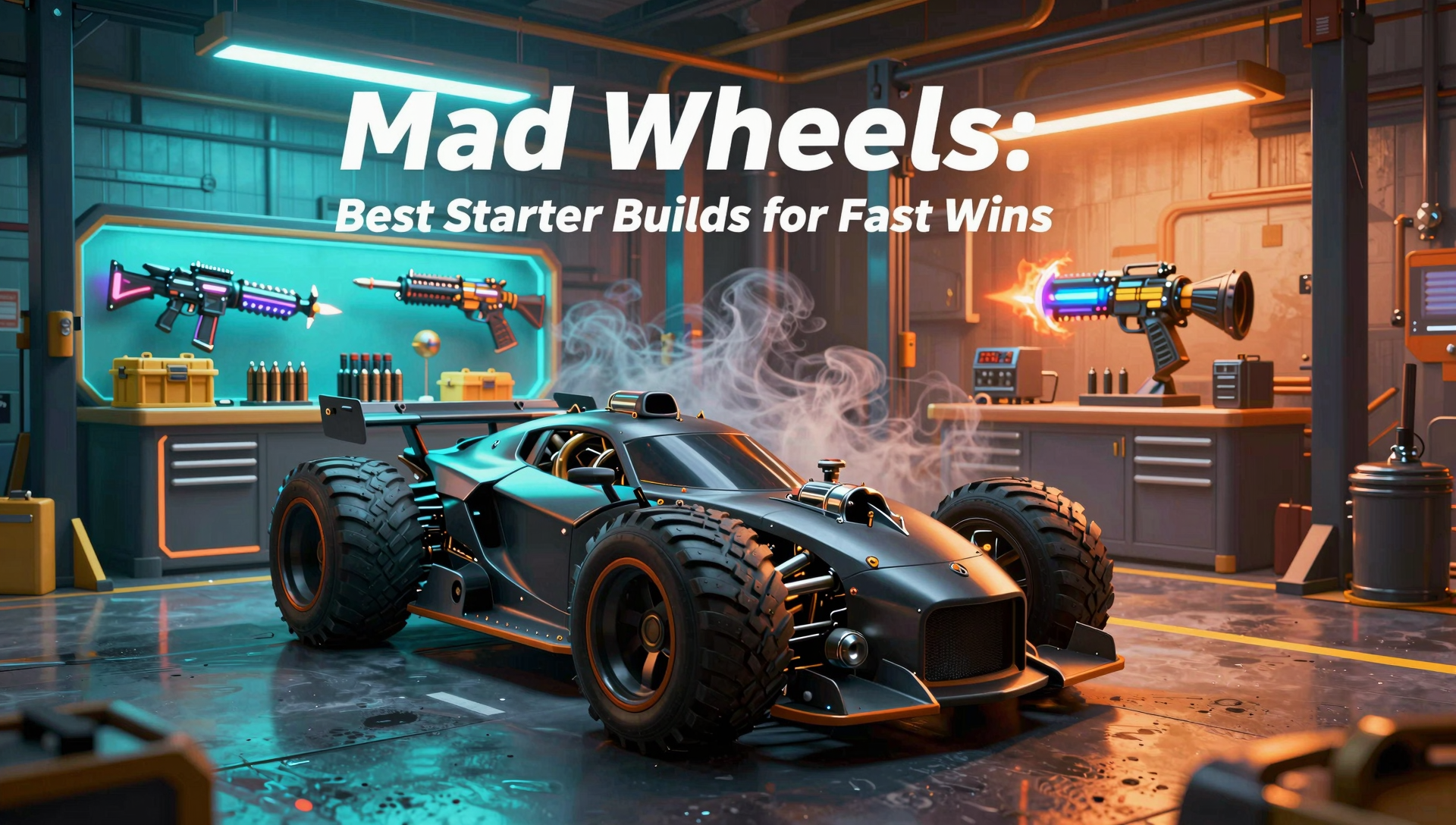
Mad Wheels weapons and parts can look overwhelming at first, but the winning builds usually follow a few simple rules. If you want fast progress, focus on parts that make your machine readable and repeatable: control, survivability, and a weapon plan that matches how you like to fight.
This guide explains the main “what should I prioritize?†decisions so you can build faster and iterate cleanly between short runs.
Quick picks: 10 part roles that matter most (and what they do for you)
- Primary weapon for your main damage plan and win condition
- Secondary weapon / utility for coverage when your main plan is off
- Core body / chassis for survivability and stability under impact
- Mobility parts for reaching targets and controlling engagement timing
- Control/stability parts for reducing self-inflicted chaos in fights
- Defense parts for surviving burst damage and learning patterns longer
- Range tools for safer damage and better spacing
- Close-range tools for quick finishes when you can force contact
- Damage-over-time / pressure tools for consistent wins without perfect bursts
- Synergy parts for making your weapons feel “online†more often
Which weapons and parts should you pick?
If you are a beginner and you keep losing early
Prioritize survivability and control first. You learn faster when you stay alive long enough to see what went wrong. A “slower but stable†build often wins more than a flashy build you cannot steer.
If you want fast wins (short fights, quick resets)
Choose a simple, aggressive weapon plan and commit to it for a few runs. Fast wins usually come from repeatable openings:
- reach the target
- land the first clean hit
- finish without taking a messy trade
If you want safer, consistent runs
Pick mid-range pressure tools and defense. Your goal is to reduce coin-flip moments. Consistency is what makes upgrades and iteration feel real.
If you want high damage (and you accept risk)
Glass-cannon builds can win quickly, but they punish mistakes. If you go this route, keep everything else simple: fewer moving parts, clearer control, and a weapon plan you can execute even when the screen is chaotic.
Common build mistakes (and the fastest fixes)
- Too many ideas at once → simplify: one main weapon plan per build
- Hard to control → add stability/control parts or reduce speed/weight extremes
- Always trading damage → add survivability or switch to safer range pressure
- Wins feel random → change one part at a time and track what improved
FAQ
What are the best weapons in Mad Wheels?
The best weapons are the ones that match your build role and you can use consistently. A “strong†weapon that makes you lose control will perform worse than a simpler weapon you land reliably.
Should I prioritize damage or survivability?
Survivability first while you learn. Once your build feels controllable and your fights are readable, increase damage to shorten fights and secure faster wins.
How do I build for short runs and fast iteration?
Use simple, repeatable archetypes and avoid full rebuilds after every loss. Change one part at a time, run a few fights, then evaluate.
Why does my build feel strong but still lose?
Usually because your engagement timing is wrong (you take messy trades) or your control is unstable under impact. Fix control and survivability before chasing more damage.
How often should I change parts?
Avoid changing everything at once. Small, deliberate changes create real improvement and help you learn what each part is doing.
Rovin Games picks
- Play Mad Wheels
- For quick arcade pacing between runs, try Glass Rush
- For a different short-session loop, play Toy Runner
Disclosure: The links above go to Rovin Games titles on rovingames.com.
See also
- Mad Wheels: Best Starter Builds for Fast Wins (Beginner Guide, 2026)
- Best Vehicle Combat Games Like Mad Wheels (2026)
- Best Game Websites in 2026: Where to Play Free Online Games Safely
See More